+90 544 760 57 80


Rafting
RAFTING
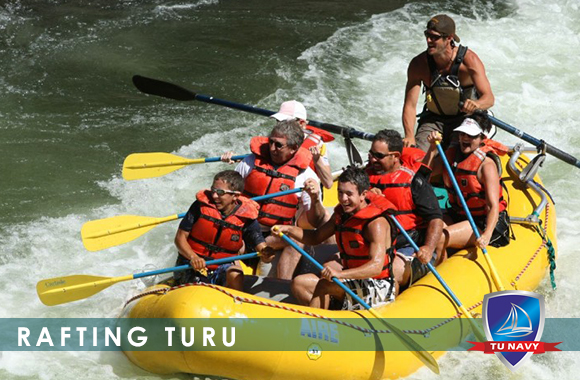
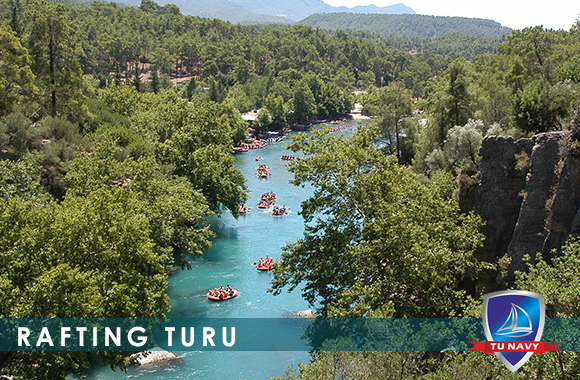
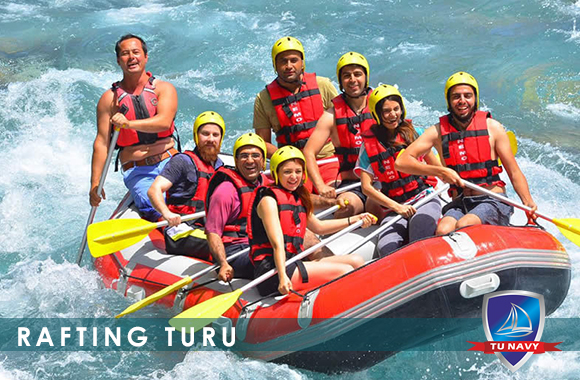
Köprüçay is one of the rare rivers that offers the possibility of rafting for everyone from seven to seventy. Here you do not need to be trained or experienced to do rafting. At the Koprulu Canyon , while the temperature in the Mediterranean beaches reaches up to 50°C in the summer, you can find yourself in the middle of a green valley, floating on the cool waters of the mountain river, away from the heat at least for a while, resting and rejuvenating your soul.
Köprülü Canyon National Park and Historical Texture
Koprulu (Köprülü) Canyon National Park is Turkey’s most popular watersports area. The national park is perfect for hiking, or to explore the ancient ruins, or just to enjoy the dramatic Mediterranean scenery. Koprulu Canyon National Park is at the middle of many natural beauties in a fertile valley. Koprulu Canyon continues for 14 km along with the Kopru River, reaching a maximum height of 400 m. Koprulu Canyon National Park, declared in 1973 as a national park, covers of 35.719 hectares. The park is in the mountains 49 km northeast of Antalya. Koprulu Kanyon National Park is in the Manavgat district of the Antalya province. The road along the coast from Antalya to Manavgat then passes through Tasagil and Beskonak. There is a management plan made in 1973 by the Turkish and American experts. Oluk Bridge on Kopru River and Bugrum Bridge on Kocadere Stream are noteworthy samples of Roman engineering. Oluk Bridge was built 27 m above the canyon by using stone blocks and overlapping technique. The bridge dates back to the 2nd century AD. Koprulu Canyon National Park has a rich flora including red pine, black pine, cedar, fir, oak varieties and wild olives. Selge Antique City and Bozburun Mountain are located within the limits of National Park. Oluk Bridge or Beskonak town is where the raftsmen get in the river for rafting in Kopru River. Village kind guest houses are available in the area. Koprulu Canyon is one of the longest canyons in Turkey. Kopru River is famous with its salmon trouts. Cypress, cedar, red pine and black pine trees form the ecosystem of the area, and the Mediterranean cypress forest, at 400 hectares wide, is the most significant flora characteristic in Koprulu Canyon National Park. The Roman Oluk Bridge over the canyon and the Bugrum Bridge over the Kocadere stream were engineering feats of their time.
Whitewater Rafting Level of Difficult Rating Scale
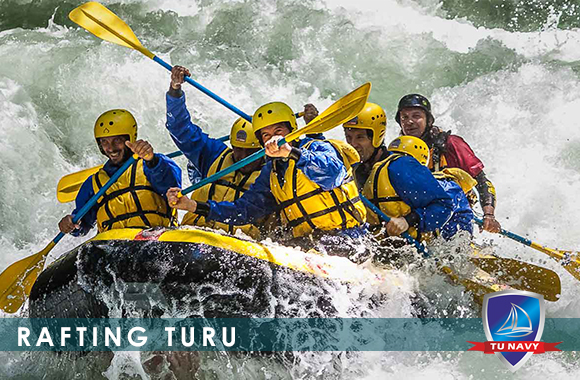
All rivers are rated on a "class" scale to help you determine the size and technicality of the whitewater. Many of our guests are in search of more moderate whitewater - simply to relax and soak up the beauty of the scenery. Others are looking for a more intense whitewater. It all depends on the river where rafting is practiced. Whitewater can be classified into 6 distinguished classes, where each has its own characteristics.
- Class 1: Very small rough areas, requires no maneuvering. (Skill Level required: None)
- Class 2: Some rough water, maybe some rocks, small drops, might require maneuvering. (Skill Level required: Basic Paddling Skill)
- Class 3: Whitewater, medium waves, maybe a 3–5 ft drop, but not much considerable danger. May require significant maneuvering. (Skill Level required: Experienced paddling skills)
- Class 4: Whitewater, large waves, long rapids, rocks, maybe a considerable drop, sharp maneuvers may be needed. (Skill Level required: Advanced Whitewater Experience.)
- Class 5: Whitewater, large waves, continuous rapids, large rocks and hazards, maybe a large drop, precise maneuvering. Often characterized by "must make" moves, i.e. failure to execute a specific maneuver at a specific point may result in serious injury or death. Class 5 is sometimes expanded to Class 5+ that describes the most extreme, runnable rapids (Skill Level required: Expert)
- Class 6: While there is some debate over the term "Class 6", in practice it refers to rapids that are not passable and any attempt to do so would result in serious injury, near drowning or death. If a rapid that was once thought to be impassible is run, it is typically reclassified as Class 5.